Have you ever been to the races and felt a little disappointed by the returns on your each-way bet? And that left you feeling somewhat confused?
I mean, each-way betting can be confusing for beginners.
So, is it possible to turn a profit? And is each-way betting worth it in the long term?
I’m going to explain the ins and outs of each-way betting, so by the end of this article, you will know:
- How each-way bets work
- How to work out any returns
- The types of races to bet on
and, more importantly, whether you should include each-way bets in your wagering arsenal to make your day at the races more profitable and exciting.
Let’s dive in.
What is an each-way bet?
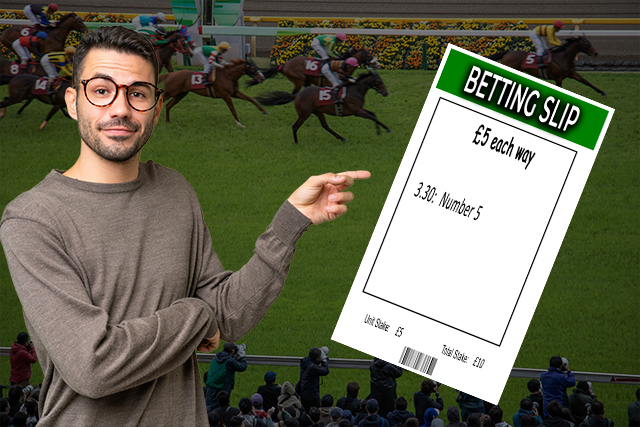
When you place an each-way wager, you are actually placing two bets. You are betting on your selection to win the race, and you are betting on your selection to be placed.
The place terms, which determine how your each-way bet will be settled, are depicted by the number of runners and the type of race. I’ll talk more about this shortly.
But first, when it comes to staking an each-way bet, because you are placing two wagers (to win, and to place), your total stake will be double your unit stake. So, for example:
- A £1 each-way bet will cost a total of £2
- A £5 each-way bet will cost a total of £10
How do each-way bets work?
Remember, you are backing your selection to either win the race or be placed. Let’s assume your horse has won the race. In this instance, both the win part of the bet and the place part of the bet will receive a payout.
- For the win, you will be paid at the full odds.
- For the place, you will be paid at either a fifth or a quarter of the odds, depending on the place terms.
Now, let’s assume your horse does not win the race, but is placed.
- The winning part of the bet is a loser, so you will not receive a return.
- The place part of the bet will receive a payout at either a quarter or a fifth of the odds, again depending on the place terms.
What are the place terms?
The following place terms are for horse racing only. Other sports where each-way betting is available may have different place payout terms.
- Races of two to four runners payout on the win only.
- Races of five to seven runners - quarter of the odds for first and second places.
- Races of eight or more runners will pay a fifth of the odds for first, second and third places.
- Handicap races of twelve to fifteen runners will pay a quarter of the odds for first, second and third.
- Handicap races of more than fifteen runners will pay a quarter of the odds for first, second, third and fourth.
Each-way betting examples
Example 1
Let’s say we have placed £5 each-way (costing a total of £10) on a horse at 17/2 in an eight-runner race. The horse ran well and finished in third place.
The winning part of the wager is a losing bet, and we have lost £5 in stake money.
The place part of the bet will pay a fifth of the odds in an eight-runner race. The total return would be £13.50, leaving a profit of £3.50.
Example 2
We have bet £2.50 each-way (costing a total of £5) on a horse at 10/1 in a seven-runner race. The horse made ground and was running on towards the post. It finished third.
A seven-runner race pays a quarter of the odds on first and second places. This would be a losing bet, and we have lost our £5 stake.
Example 3
We have placed £10 each-way (costing a total of £20) on a horse at 13/2 in a fourteen-runner handicap race. The horse was never in any doubt and won easily by two lengths.
The winning part of the bet: £10 at 13/2 returns £75.
The place part of the bet: handicap races of twelve to fifteen runners pay a quarter of the odds on first, second and third. So, £10 at a quarter of 13/2 would return £26.25.
So, £75 plus £26.25 returns us a total of £101.25. That’s a profit of £81.25.
You can also bet each-way on doubles, trebles, the Yankee, Lucky 15 and more. These are all possibilities you will find in your local betting shop.
To summarise
Are each-way bets worth it in the long term? It all comes down to the types of races you bet in and the prices you are willing to accept.
If you wager in races with five to seven runners, you are only going to receive a return if your selection finishes first or second. That’s great if your selection wins the race, but you only receive a quarter of the odds if it finishes second. In that scenario, your selection would need to be 9/2 or more to turn a profit.
And, backing a horse in races of eight runners or more, which pay a fifth of the odds first, second and third, your selection would need to be at 11/2 or more if it finishes second or third to make a profit.
My advice: if you’re backing each-way, bet on races with eight or more runners and look for value-priced selections.
But that does take a degree of skill and an understanding of form.
Visit my Ratings System and learn how to rate horses based on form and ability to find those value-priced selections.
Click here to get the knowledge and skills needed to find value winners.